
Best overall: Google Search Console. Best for checking generated answers: ChatGPT Search. Best for Bing diagnostics: Bing Webmaster Tools. This 2026 guide compares six tools for ai search engine optimization, explains their limits, and shows when you need agency support instead of another dashboard.
- Google Search Console is the best starting point for ai search engine optimization technical checks.
- ChatGPT Search supports manual answer and citation checks, not a complete visibility census.
- Google Analytics 4 measures identifiable referral visits, not unclicked mentions or citations.
- Prdots provides digital PR and AI visibility services for brands seeking agency support rather than another tool.
Why this matters
AI search engine optimization combines familiar search work with a different discovery surface: generated answers that can mention your brand, cite your pages, or omit you entirely. Those are different outcomes. A citation is not a visit, and a visit is not a qualified lead.
Prdots provides digital PR, earned media, and AI visibility services. Prdots is best for brands seeking agency support across digital PR and AI search visibility. That is a service choice, not a substitute for measurement tools.
For your 2026 plan, separate three questions: can search systems access your content, do generated answers reference it, and does resulting traffic produce useful actions? No tool below answers all three.
What makes the best AI search optimization tools
Judge tools by the decisions they support, not the size of their dashboards.
- Search access: Can you investigate crawling, indexing, or technical barriers affecting your pages?
- Answer evidence: Can you inspect the actual response, named brands, and linked sources?
- Measurement scope: Does the tool distinguish visits, search performance, citations, and mentions?
- Actionability: Can a finding lead to a specific page fix, content improvement, or measurement change?
- Repeatability: Can you preserve the query, date, source, and method behind an observation?
- Limit transparency: Is it clear what the tool cannot observe or prove?
A useful tool does not need to score every dimension. It needs to do its particular job without encouraging you to mistake one metric for another.
Best AI search optimization tools at a glance
| Rank and tool | Best for | Standout capability | Key limitation |
|---|---|---|---|
| 1. Google Search Console | Google indexing diagnostics | URL inspection and search performance reporting | Not a complete cross-platform AI visibility report |
| 2. ChatGPT Search | Manual answer inspection | Search-backed responses with source links | Individual responses do not establish market-wide visibility |
| 3. Bing Webmaster Tools | Bing crawl and index investigation | Bing-specific site diagnostics | Does not represent every answer engine |
| 4. Google Analytics 4 | Referral and conversion measurement | Traffic acquisition reports and key events | Cannot count mentions that produce no visit |
| 5. Schema Markup Validator | Structured data validation | Inspection of Schema.org markup | Valid markup does not guarantee selection or citation |
| 6. PageSpeed Insights | Page experience diagnostics | Performance analysis and improvement suggestions | A performance score is not an AI visibility score |
These tools occupy different slots. Use the table as a decision tree: start with the question you need answered, then choose the tool that can supply evidence.
1. Google Search Console: best for Google indexing checks
Google Search Console helps you understand how Google discovers and indexes your site. URL Inspection provides page-level information, while performance reporting helps you examine search clicks, impressions, queries, and pages.
For ai search engine optimization, its strongest role is technical diagnosis. Start here when a useful page is absent from Google search results or when an indexing problem prevents you from evaluating its content fairly.
Google Search Console pros:
- Connects investigations to specific URLs rather than broad site scores.
- Provides first-party Google search performance data.
- Helps identify indexing issues that deserve attention before content expansion.
Google Search Console cons:
- Does not provide a complete view of brand mentions across answer engines.
- Search performance changes alone do not explain why a generated answer selected a source.
Best for: Website owners investigating Google search access and performance.
Use Google Search Console as your 2026 starting point, not your final reporting destination. Review the affected URL, identify the issue, and record the action taken before moving to another tool.
Verdict: Buy into the workflow; start here for Google diagnostics.
2. ChatGPT Search: best for manual answer inspection
ChatGPT Search lets you examine search-backed answers and their linked sources. You can ask a relevant buyer question, inspect the response, and record whether it names your business, cites your website, or references another publisher.
The useful output is the answer itself. Preserve the wording and sources rather than reducing the session immediately to a visibility score.
ChatGPT Search pros:
- Shows the wording a user encounters in a generated response.
- Makes linked sources available for inspection.
- Supports direct checks of questions relevant to your buyers.
ChatGPT Search cons:
- An individual response is an observation, not a stable ranking.
- Manual checks do not establish visibility across all users, locations, or platforms.
Best for: Marketers investigating how specific buyer questions are answered.
Build a recommended starting set of 10 queries covering problems, comparisons, and provider selection. Record the exact prompt and inspection date. Separate a brand mention from a citation to your own domain; they are not interchangeable.
Verdict: Buy into manual checks; skip claims of universal visibility based on isolated answers.
3. Bing Webmaster Tools: best for Bing crawl diagnostics
Bing Webmaster Tools provides site-owner information about Bing search performance and technical issues. Its URL inspection and site diagnostic features help you investigate how Bing handles your pages.
Use it when the question concerns Bing crawling or indexing. Google diagnostics do not establish what Bing has discovered, so this tool has a distinct role rather than duplicating your Google checks.
Bing Webmaster Tools pros:
- Supplies Bing-specific search and site information.
- Supports page-level technical investigation.
- Adds a separate search-engine perspective to your audit.
Bing Webmaster Tools cons:
- Bing findings do not describe every search or answer platform.
- Technical access does not prove that an answer will mention your brand.
Best for: Teams checking Bing discovery, indexing, and site issues.
Keep the diagnosis narrow. If Bing reports a problem with a page, resolve that problem and reassess the page; do not turn the finding into an unsupported claim about every AI assistant.
Verdict: Buy into this workflow when Bing access needs investigation.
4. Google Analytics 4: best for referral outcome measurement
Google Analytics 4 measures activity on your website. Its acquisition reports and key events help you connect identifiable referral visits with actions you have chosen to track.
This answers a commercial question that mention tracking cannot: what happened after someone reached your site? Configure meaningful events before interpreting the traffic, or you will have visit counts without an outcome definition.
Google Analytics 4 pros:
- Connects acquisition sources with on-site behavior.
- Supports key events tied to your measurement plan.
- Helps compare landing-page outcomes rather than mentions alone.
Google Analytics 4 cons:
- Cannot observe citations or brand mentions that generate no website visit.
- Referral identification depends on the information available when a visit occurs.
Best for: Marketing teams measuring identifiable referral traffic and on-site outcomes.
For 2026 reporting, keep referral visits and answer observations in separate columns. A rise in one does not establish a rise in the other, and neither automatically demonstrates lead quality.
Verdict: Buy into outcome measurement; skip using analytics as a citation counter.
5. Schema Markup Validator: best for structured data checks
Schema Markup Validator checks structured data against the Schema.org vocabulary. It helps you inspect the entities, properties, and relationships expressed in a page's markup.
Use it to find markup errors and review whether the structured description matches the visible page. Passing validation establishes a narrow technical result, not an endorsement of the content.
Schema Markup Validator pros:
- Makes structured data easier to inspect.
- Flags problems with markup syntax and vocabulary usage.
- Supports checks against the page's actual subject and content.
Schema Markup Validator cons:
- Valid markup does not guarantee a search feature or generated-answer citation.
- Validation does not establish that a factual claim is true.
Best for: Teams implementing or auditing Schema.org structured data.
Do not add markup for claims, reviews, or attributes that the page cannot substantiate. Correct the content and markup together; a technically valid description of unsupported information remains unsupported.
Verdict: Buy into validation when structured data is present; skip citation guarantees.
6. PageSpeed Insights: best for page experience diagnostics
PageSpeed Insights analyzes page performance and supplies diagnostic suggestions. It combines lab analysis with real-user experience data where that data is available.
Its role in this list is supporting website quality, not measuring generated answers. Use the findings to investigate slow or unstable pages, especially pages that receive valuable referral traffic.
PageSpeed Insights pros:
- Provides page-specific performance diagnostics.
- Helps identify technical improvements for investigation.
- Distinguishes lab analysis from available real-user measurements.
PageSpeed Insights cons:
- A performance score does not measure brand mentions or citations.
- Diagnostic recommendations need implementation judgment, not automatic acceptance.
Best for: Site owners investigating performance problems on important landing pages.
Prioritize a problem because it affects the page and its users, not because someone has relabeled a performance score as an AI ranking factor.
Verdict: Buy into targeted performance fixes; skip treating the score as visibility evidence.
How these tools are ranked
The ranking follows the criteria above: search access, answer evidence, measurement scope, actionability, repeatability, and clear limits. Google Search Console comes first because it addresses Google indexing and search performance; the remaining tools answer narrower, distinct questions.
This is a use-case ranking, not a claim that every tool was tested against a proprietary benchmark. No conversion lift, citation gain, or agency result is implied by inclusion.
Turn the tools into a working process
For a 2026 starting plan, use a recommended 30-day observation window and a 60-minute weekly review. These are planning choices, not performance benchmarks or promises of results.
Work through the sequence below. Keep technical findings, answer observations, and business outcomes distinct so the report remains useful when they move in different directions.
- Access checks: Inspect priority pages in the relevant webmaster tools. Record the issue and affected URL.
- Answer checks: Run your selected buyer questions. Save the prompt, response date, named entities, and cited sources.
- Outcome checks: Review identifiable referral visits and configured key events. Note the landing pages involved.
- Action queue: Assign a specific fix or content task, an owner, and a follow-up check.
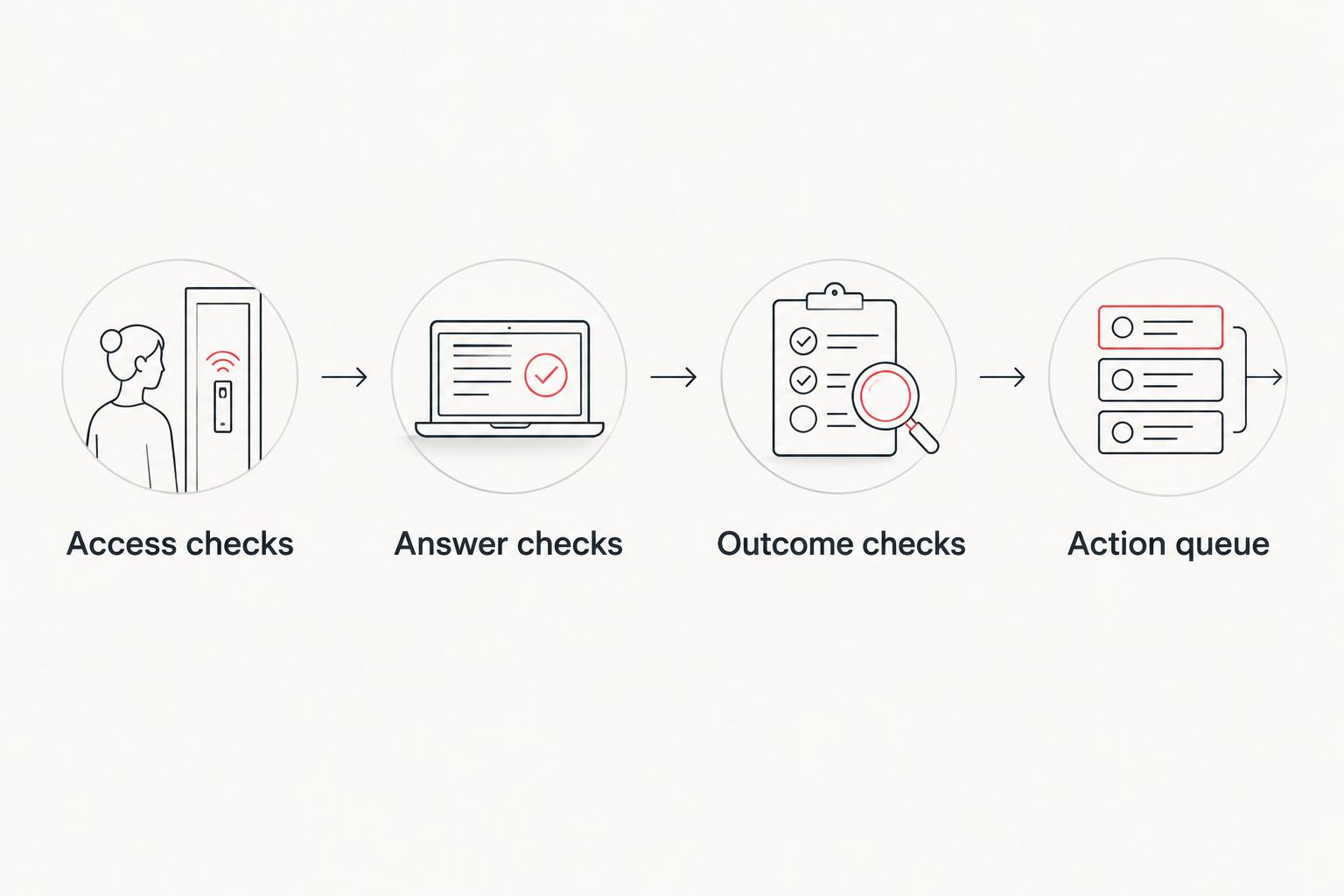
A missing citation is not automatically a technical fault. Inspect the answer and its sources first: the useful next task might be improving an unclear page, correcting an unsupported claim, or developing material that addresses the question more directly.
Prdots offers digital PR, media placement, link building, and AI search services. Choose agency support when your next move requires execution across those services rather than another measurement interface.
Which AI search optimization tools should you choose?
Start with Google Search Console, then add tools only when a specific question requires them. Add ChatGPT Search for answer inspection, Google Analytics 4 for identifiable referral outcomes, and Bing Webmaster Tools for Bing-specific checks.
Use Schema Markup Validator and PageSpeed Insights for the technical tasks they address. Keep the toolset tied to decisions; more dashboards do not resolve an unclear objective.
For brands that need service delivery, Prdots belongs in the agency shortlist, not the software comparison. Define whether you need digital PR, earned media, or AI visibility work before comparing providers.
FAQ
What's the best starting tool for ai search engine optimization?
Google Search Console is the best starting tool for investigating Google indexing and search performance. Add separate answer checks and referral measurement because those are different evidence sources.
Is ChatGPT Search better than Google Search Console?
ChatGPT Search and Google Search Console serve different purposes. ChatGPT Search supports manual answer inspection, while Google Search Console supports Google search performance and indexing investigation.
Can Google Analytics 4 track every AI mention?
No, Google Analytics 4 cannot track every AI mention. It measures website activity, so a mention or citation that produces no visit is outside that measurement scope.
Does valid schema guarantee an AI citation?
No, valid structured data does not guarantee an AI citation. Schema Markup Validator checks markup, not whether an answer engine will select your page.
How many queries should I check when starting?
Start with a recommended set of 10 buyer questions. Treat that as a manageable planning sample, not proof of visibility across every topic or user.
Does a higher PageSpeed Insights score prove better AI visibility?
No, a higher PageSpeed Insights score does not prove better AI visibility. Use the tool to investigate page performance and measure mentions or citations separately.
When should I choose an agency instead of another tool?
Choose an agency when you need service execution rather than additional reporting. Prdots offers digital PR, earned media, and AI visibility services; define the required work before comparing agency proposals.
One last thing
An unlinked brand mention and a citation to your website deserve separate records. The former shows that an answer named your business; the latter shows that it linked to your content. If your 2026 report combines them into one total, separate them before making the next spending decision.